Blog #3

Lewis Vandervalk • December 7, 2022

So we have an 8 month old next week. He loves scooting and spinning, and he's so eager to stand by himself. He laughs and laughs every time he feels himself support his own weight, while holding onto our fingers.

Now here's what Lewis and I are not going to do.

  • We will not demand that he stand right now and tell him to do so, by encouraging him and telling him that it's going to help him walk later on!
  • We will not punish him because he can't stand all by himself yet.
  • We will not hold his body up, then let go immediately, only to have him fall down and cry out in pain. And we will not do this continuously until he FINALLY stands.

(Which come to think of it, we could convince ourselves that this technique worked, after a few brutal weeks of "discipline". Because he WILL stand on his own. And we could tell ourselves that it was our discipline that made it happen. But we would be extremely wrong).

His body will be able to support itself when it's ready. There's no need to "teach him". Just give him safe space and an environment to move his body.

Here's the thing, though.

How many parents believe it's their duty to discipline their kids into being kind and generous?

Are you "teaching" your kids to share?

Are you holding yourself responsible to punish and shame your kids out of selfishness?

We understand how bodies grow and build muscle. We can't discipline weakness out of bodies.

Well there are many emotional and psychological milestones that work EXACTLY like this.

Seriously.

When we see our kids not sharing with other kids, at a playdate or with their own siblings, we may think, "Ahh!! I have to start teaching them to share more and withholding this and withholding that. Oh no, they're too bossy, I have to punish!"

But guess what? There is NO hardware in our  brains for sharing until certain psychological milestones happen first. (Just like there is no hardware in our  brains for walking until certain physical milestones happen first).

Queue personal experience:

We have a vehicle box in our living room.

It holds some vehicles that are Everett's, some that are Zalie's, and recently some that are Desmond's.

Desmond doesn't care if Everett or Zalie play with his.

Wow! He must be so good at sharing right?

No.

Complete unawareness of things that come and go in front of his eyes is still where we are. He likes it while it's there and couldn't care less if it disappears.

But soon? The concept of OWNERSHIP will develop in his brain.

One day soon, Desmond will be playing with a toy, and Zalie will snatch it, and he will BURST into tears.

And then soon after, he will KNOW that the red Oball Car is HIS. And he will ROAR when he sees Everett playing with it. And I will say, "Yes!" inside because I know this is GOOD. We are getting closer.

Zalie just turned . She's the one who sees my water bottle and immediately brings it to me. Or sees Everett's blueberry ball and brings it to him. This is an important milestone. The concept of Unconditional Ownership. And it's where Zalie is.

She understands that certain things belong to certain people (including her and her own things!). It's amazing. And encouraged. IT'S NOT BOSSY.

Selfishness is - believe it or not - an important stepping stone to sharing.

Once toddlers can rest in the knowledge that things BELONG to them, they will start to experiment with sharing.

When will Desmond start to walk?

When he's ready.

When will your child start sharing?

When they're ready.

Understanding and trusting Unconditional Ownership is a precursor to sharing. If a child cannot rest in the unconditional ownership of something, their brain will not feel safe to advance to sharing that thing. The brain will be stuck seeking ownership of something. Which is why some parents find their older kids bossy and "selfish". They're likely STUCK.

They're likely stuck seeking ownership of something.

Anything.

Do you let them unconditionally own anything? Or is every item they "own" allowed to be taken from them or forced to be shared?

They are likely the kids who are seeking control over ANYTHING AND EVERYTHING all day long.

(Which consequently may make you try harder to control their belongings and limit their ownership, because they NEED to learn. But unfortunately, that will only force their brain to be more demanding and seek HARDER to own just any single thing!!!!)

Queue power struggles. All the time.

I remember one of Everett's first times voluntarily sharing his toy with Zalie. She started to have a lot of fun with it. And then Everett changed his mind and demanded it back.

This upset Zalie of course, but I held space for her tears and we respected Everett's toy and his conditions for her playing with it.

Many things are learned here.

Zalie is being taught that we respect ownership. So down the road, she will grow to trust that HER things will be respected too. This is helpful and encourages HER brain to thrive and develop. EVEN THOUGH SHE CRIES! NO WAY!

And Everett can continue experimental sharing, at his own pace and risk, because his brain can still rest in the ownership of his things.

If I demanded that Zalie have a longer turn? I disrupt Everett's development and make it all about OUR relationship. I use my big person control to steal his. This never bodes well for keeping little  brains feeling safe.

If I interfered with more sharing rules, the sharing skill will develop, but likely as a survival based skill. Meaning that it's associated with MY approval. MY happiness. MY control. And ultimately, they depend on me, their big person, for survival. So they will obey (when I'm around...) And then maybe later put up a STINK about the red plate at supper time.

See if I stood Desmond up, and let him go only to have him tumble, and continued several times a day, as a "standing lesson", he will likely develop an intense fear of standing. Legit. If I did it enough times in his current development phase, his body will likely release stress hormones upon standing, just to help his body brace itself for that fall. If I wait another couple months, he'll likely be doing it all by himself. No matter how many times I help him practice.

That's how the body works.

And if you never tell your kid to share?

Or if you never encourage them to share their toys?

Guess what?

They're still going to share.

If they have very little that is unconditionally theirs, you may not see that spontaneous sharing until they're older, maybe with a romantic partner or a trusted friend.

But they WILL spontaneously share. It will likely be something that they trust is theirs. And it will only happen when their brain feels safe.

"Instead of training children to meet the expectations of adults, we should be training adults to meet the psychological and emotional needs of children." -Z.Tolman


By Lewis Vandervalk December 9, 2022
Blog #4
By Lewis Vandervalk December 9, 2022
Do you know who does the chores at our house? The big people. Lewis and I hold the responsibility of doing everything. Even cleaning up THEIR toys. THEIR messes. Putting THEIR clothes away. And we will never, ever demand our kids to do something that we do not do. If you want your kids to do something? Model it. Immature brains HATE hypocrisy and double standards. They find it hard to grasp doing something that they don't see modeled. It's so much more natural to follow a leader. And I was raised in a house where I could be disrespected, but I couldn't disrespect. I couldn't follow my leader. I had to do different things than them. I had to do what they said to do. Always. Even if it didn't line up with anything and changed constantly. Where kids and their immature brains are concerned? That doesn't make sense. And when things don't make sense? Brains don't feel safe. And when brains don't feel safe? Development can be hugely stifled, and behaviour problems can take a whole whack of directions. Modelling is THE greatest educator. No competition. AND. There's a sweet spot. Usually in the toddler years (18 months to even 5ish). Kids LOVE TO HELP. But they're slow. They ENJOY "chores". But. They want to sweep things everywhere, because piles are hard to produce when your motor function isn't great. And. They want to take all 50 pieces of laundry out of the washer 1 by 1. Because their brains work in simple ways. And they want to take the garbage out. Slowly. And they get so frustrated when they can't carry it as easily as you can. And they cry! Because they need help regulating their frustration! "Oh my gosh. Just let me do it. You're getting too frustrated." "You're taking too long. I'm going to finish it this time. Maybe when you're bigger." Sound familiar? Only problem is? You're teaching your kids that these things are judged HARD. They're WORK. And they're not fun and need to be done as soon as possible. So we can get back to real life. And it just may be that YOU see things in this light. In our house? There aren't chores. There's a house that needs to be (somewhat) maintained 😂 And we are a family team. Everyone can help. Always. But Lewis and I hold only ourselves responsible. And the kids know they have the freedom to always say no to helping. And we've had to face a lot of inner work following through with this. I can't do as much as I'd like to in the run of a day with kids everywhere. And here comes my story. I always have a story. Basically once a week, I do a hot wash of towels and cloths. It's a big one. And I know it's time to do it when there's just an overabundance of cloths and towels everywhere in all the baskets and counters and floors. So I'll announce that it's time, and we take a super long time going to all the rooms fetching all the towels and it's kind of a blast. And the kids make a big pile and we load it in the washer. They pour the liquid soap in the top, usually getting it everywhere but they get better every time. And then we watch as the front load washer washes them all. It's Desmond's favourite part as Everett says. We'll sit there together. Watching them spin for like 20 minutes. Seeing if we can "see each of the towels we put in!" And then the kids find something else to do. So today. I was planning to do a towel load this afternoon. But at 10:30am, Everett was walking around the house and announced, "Towels are everywhere. I want to do a towel wash." So I was all for it. I said, "Let's go!" And he stopped me. NO. Just Everett. "Okay. I can respect that. Can I help you find towels from our room?" NO. So I watched. (Without affirming or "good jobbing" by the way. That only instills a reward mentality/ extrinsic motivation, which is not what I'm going for here. More on that later). Until. Zalie said, "Zay-zee help!" Everett: "No. Just Everett!" Panic. What do I do. Okay. So I thought out loud. Collaborating and problem solving with my 3 year old and almost 2 year old. Like I do about a dozen times a day. "Hmm. I hear that Everett wants to do the towel wash. Just Everett. But we are a family team. And everyone can help. We can ask Zalie if she can respect your doing the laundry by yourself." It didn't go well. It was hard for Everett. But I had to hold that line, that everyone can always help. Remember my generous post? About how the generosity needs to be tamed in our household? So does helping. It's crazy. They ended up agreeing that Zalie could bring towels to the pile, and Everett would load them all and do the soap and press the buttons. Zalie said she could "beb-bect" that. And I just died. And you know what? Once their brains develop more? And empathy is in full swing? I don't think Zalie will mind Everett doing it all alone. You know? But toddlers? Their brains CRAVE control. It's how they function and develop the best. So it worked. And I'm here on the couch folding the towels that my 3 year old washed today. He sees me to laundry almost daily. And WHENEVER he wants to help, I let him. Even hanging clothes on the laundry rack that I have to redo after he's asleep. Washing dishes that Lewis has to rewash after he's asleep. This is how we do chores. We do them together. And we take forever. So that down the road, (or apparently when they're 3) they'll see something in the house that needs doing, and DO IT. Because they're part of the team. And they feel important every day. They're not employees bossed around. We all do everything. Together. And it's how it'll always be.
By Lewis Vandervalk December 7, 2022
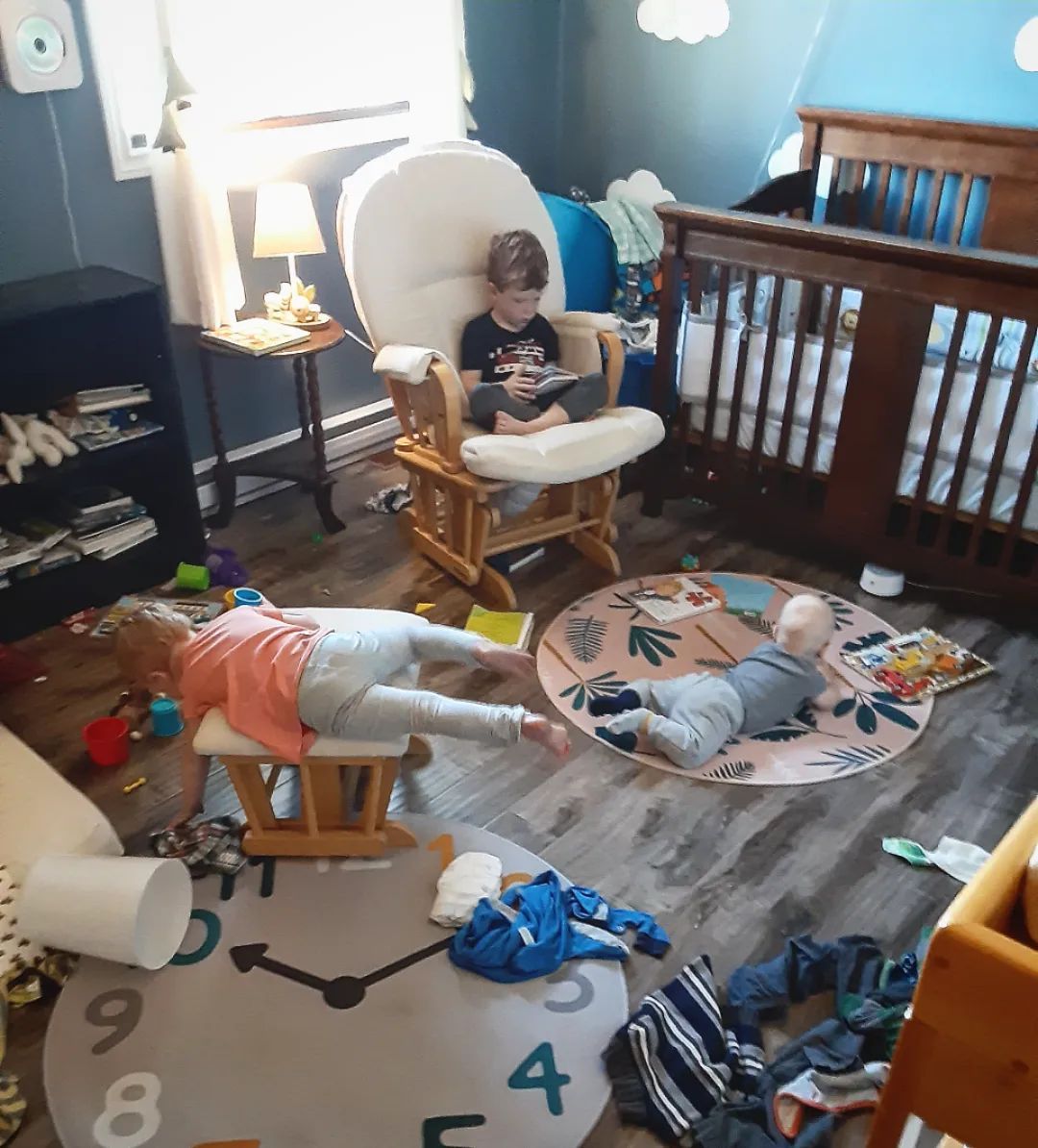
All day long. I work.  On my relationship with them. On my relationship with me. Giving them scripts and tools for communicating with me and each other. Problem solving. Collaboration. And for a few minutes a day, I get to watch them bloom and unfold. The seed planting season is huge right now. And the blooming isn't often. But I know there will come a day when the blooming will be REAL. And they'll be able to play all day long together without much of me guiding them. It's so incredible to be in the here and now. As hard as it is.
By Lewis Vandervalk December 7, 2022
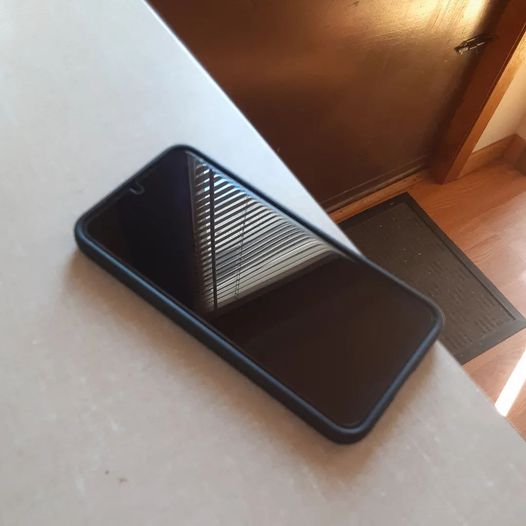
Yeah, you might see just a phone on a countertop. But it's my husband's phone. And he's out playing with the kids while I make supper. See it wasn't always like this. He was the dad who responded to messages for the duration of Everett's bathtime. We aren't ashamed of our past. And I'm so proud of his intentional choice and shift in this way. And some days, it's hard for him. But he's practicing being fully present while he parents our kids. And the work he's putting in? It shows in their behaviour. And it's not easy being a business owner. And when he comes back to this phone in a couple hours? It will be lit up like a Christmas tree with notifications, messages, missed calls, texts, etc. Some new clients, some fires that need putting out. And all of them will be super urgent. They all are. I know that. This sight solidifies the fact that he's actively making the choice to leave it. Put it on the back burner. As hard as that is for him. Because his work could be 24/7. But right now he's choosing sand and puddles and throwing balls, and attentively awaiting every "Daddy, watch!!!" They feel love. I feel grateful. And so so proud of my husband. And everyone else will have to wait.